In 1938, Catalin radios became smaller with the introduction of Emerson’s “Little Miracle”.

The Emerson Model AX235 is just 9-inches wide, 5-inches high, and 4-inches deep. That’s a small space to include all the workings of a tube radio in 1938. The case is made of marbled Catalin plastic, and the grille and knobs are white Tenite. Unfortunately, heat from the tubes and the slight shrinking of the Catalin case over time, tended to warp the grille.

As you can see, the yellow marbling in the red case makes for a striking look for the radio. The Emerson Radio & Phonograph Corporation decided to offer customers multiple choices. First of all, the Catalin came in several color combinations.

Here’s the same model, and this one looks like a “Halloween Version”. Actually, it started as an alabaster white that has turned into an almost-orange patina. Other Catalin colors included cases in blue, green, or black. Plus, various swirled mixes of Catalin were poured into molds, and that gave us many interesting variations. No two marbled Catalin radios are exactly alike. The Tenite grilles and knobs also came in a variety of colors, including black, white, green, red, and orange.
But wait, there’s more!

Except for its same small size, the Plaskon version looks completely different (I love this design!). It’s also from 1938, and Emerson used the same radio chassis, but a different dial. You can see the case is much more intricate. Catalin could never have all the shapes and lines you see here in the Model 246 “D-dial”.

And the choices didn’t stop there.


Wood had been the original choice for radio cases for many years, and Emerson came up with this cool version with a bullseye grille and a bullet-shaped case with green inlaid lines. Again, the chassis is the same as the other two versions. It shows how artistically varied radio designs were, even though from a practical standpoint they all did the same job…receiving radio stations. This is the Model AX212, also from1938. Even the wood model had choices, walnut or maple.

If you look closely on the right side of the above 2007 photo, you can see three of my little Emerson radios next to each other (photos enlarge with a click).

My wife, Jeannette, has always been supportive of my radio hobby, and enjoys our colorful collection. This “Little Miracle” is her favorite of all the radios we’ve had over the years. She likes the petite size, the shiny translucent case, and the dramatic red & white color combination.
Extra: Here’s a photo of the printing on an Emerson box (from the book Classic Plastic Radios by John Sideli).

The photo confirms that “Little Miracle” was the official name of the radio (not just a nickname), that the model number does not have a hyphen, and unless it’s just hype, the radio was a big seller.
And here’s an old ad from Monsanto asking businesses to use the still-new medium of plastics…the way Emerson did with these radios.

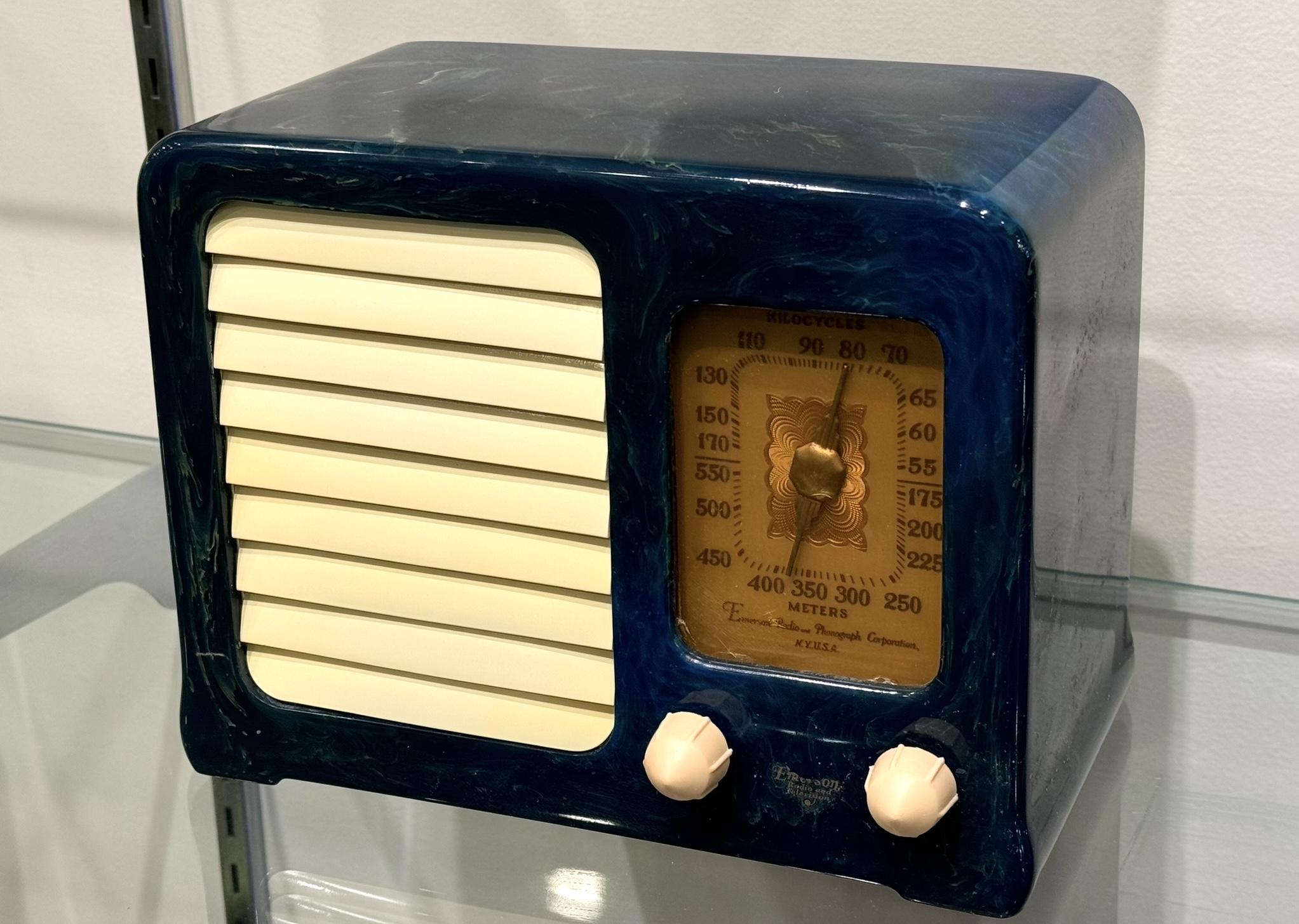
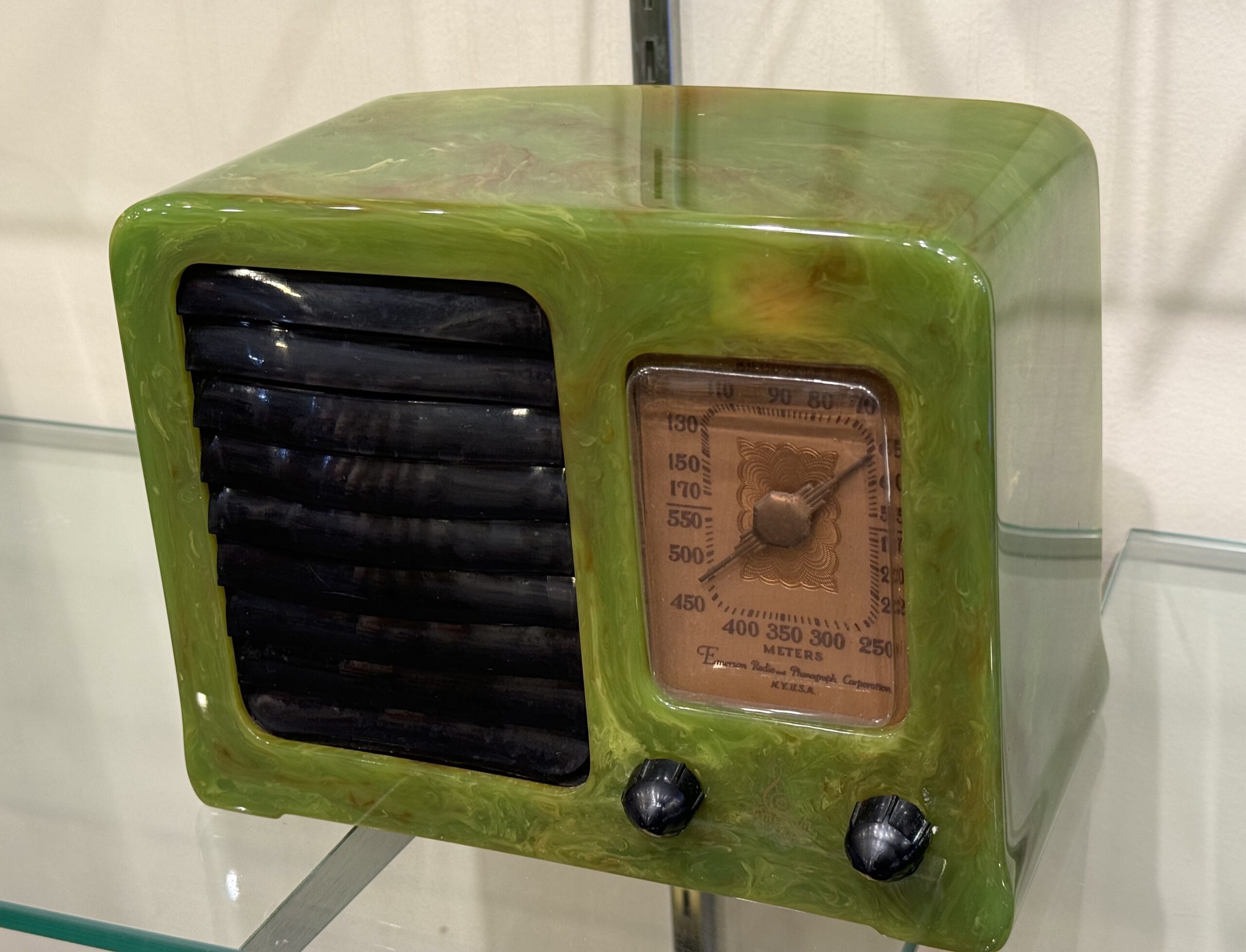
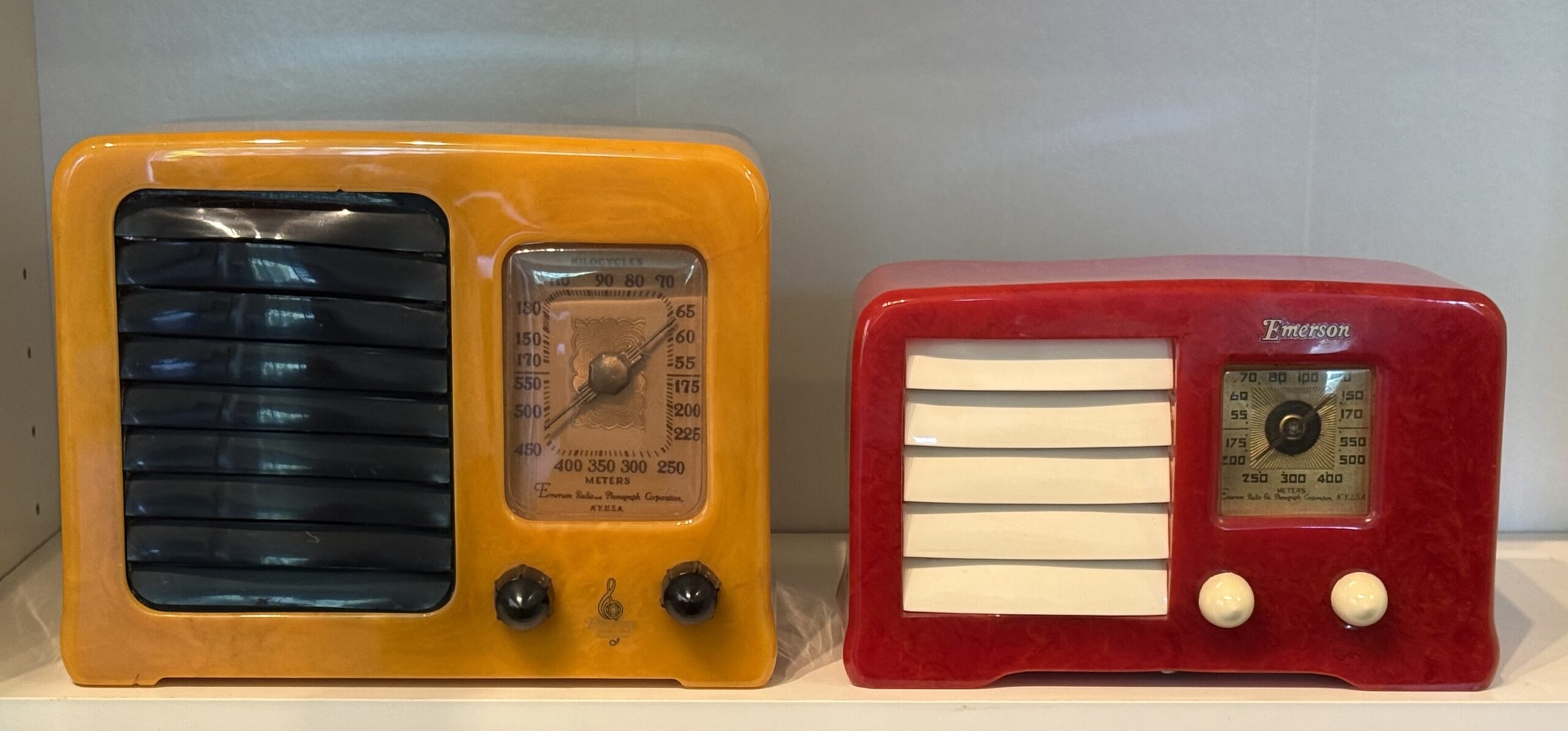
Bonus: A year later, 1939, Emerson released the larger “Big Miracle” Emerson Model 258. Here are two of them in rare blue and green Catalin versions, plus a size comparison of my Big & Little Emerson Miracles in the final photo.
Can I ask will these old radios still be functional with the modern advance of DAB radios ? Or are they destined to be forever ornaments if nobody is transmitting on these wavelengths in the future? It’s a serious question and in no way meant derogatory in any sense. I see the aesthetic value but are they future proofed to any degree ?
Editor: Many of the old radios work, and there are hobbyists who repair them. Most collectors enjoy the radios as art. You’re right that there’s a shortage of AM radio stations, especially those that play popular music. Sometimes old radios are fitted with Bluetooth receivers so music can be streamed into them. The radios are very likely to increase in value, as many of them already have over the years. Radio collecting is not really a nostalgia hobby, since the radios of the 30s and 40s are older than nearly all collectors. The beauty of the designs and materials should appeal to future generations.